
BAMBA AL MANSOUR + DADDY 0 - STET
From Africa To 808s: A Lineage Of Leadership
Much of what exists within the Black Amsterdam Museum today can be traced back to something that was once planted in Bamba Al Mansour by someone else. The vision behind B/A/M/ therefore provided a fitting starting point for the sixth and final conversation in this part of the African Studies Program. At its centre was an older tradition, one in which elders care for, guide, and invest in those who come after them. Rather than taking the form of a lecture, the evening brought Bamba together with his mentor Daddy-O, founding member of Stetsasonic, for a Q&A centred on culture, legacy, friendship, and above all, mentorship.
Closing the series through a conversation between mentor and mentee brought us back, in a different form, to where the program began. Over the previous weeks, we repeatedly returned to the importance of listening to those who came before us while they are still here to tell their stories. This time, that principle was not simply discussed, but embodied in the relationship sitting before us. Elders are among the sources of knowledge we have too often allowed to pass us by, and reconnecting with them also means reconsidering how knowledge is received, carried, and eventually passed on. This recap looks at what a relationship between mentor and mentee can teach us about that process.
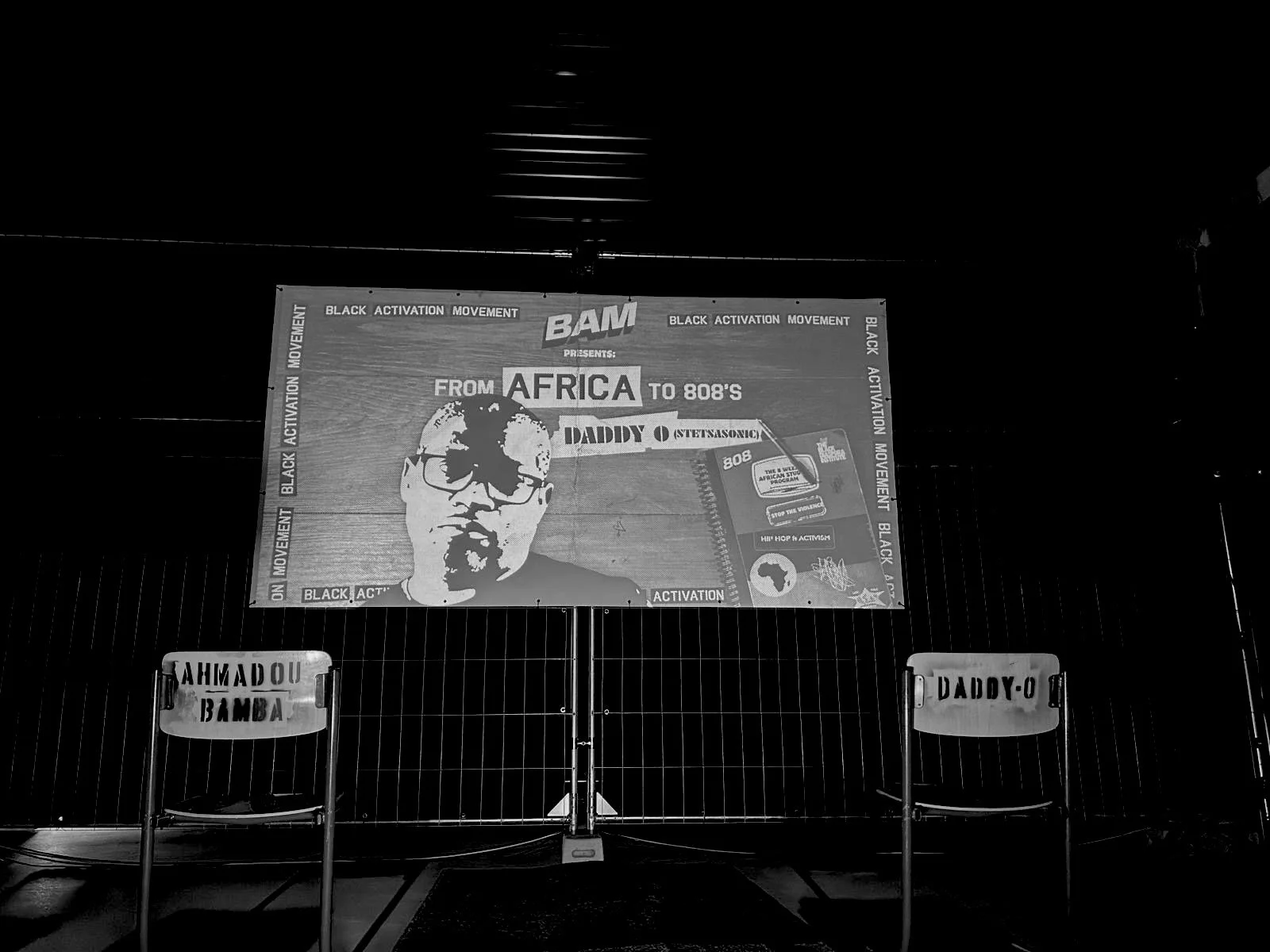
More Than a Talk, It Was a Full Circle Moment
The conversation traced a relationship that began decades before either of them could have imagined sitting together at the Black Amsterdam Museum. Bamba was around fifteen when he first met Daddy-O, who had already become a prominent figure in Hip Hop through Stetsasonic. To Bamba and his peers, the group represented the kind of artists they looked up to. Visiting Daddy-O at his home in Brooklyn therefore left an impression that went far beyond meeting someone they knew from music videos. Behind the public figure they admired, they encountered a family man. That experience would become part of how Bamba came to understand the person behind the artist.
What stayed with him just as strongly was the space Daddy-O created for education and activism through Hip Hop. Stetsasonic could have limited its music to subjects that were easier or more commercially appealing, yet the group also used its platform to address political issues and reach younger generations. Africa became particularly significant. Their 1987 track A.F.R.I.C.A. addressed apartheid and the struggles taking place across Southern Africa, while an accompanying teaching guide brought those subjects into schools. Music could therefore do more than entertain. It could introduce young people to histories and political realities that might otherwise remain outside their education.
For Daddy-O, this engagement was also connected to being surrounded by activists and to a time when political commitment was expected to lead somewhere. During the Q&A, he contrasted that experience with forms of activism today that, in his view, can lack clear demands or direction. Earlier movements were not necessarily successful because words alone were enough, but words could give people a reason to enter the streets. Activism required knowing what you stood for and being prepared to act upon it.
That same sense of purpose shaped his relationship with Bamba. Daddy-O recalled inviting him to join a journey to Africa because, despite his young age, he believed Bamba was ready and understood where his heart lay. Bamba was unable to go, although for him it would have represented a first return home. The invitation itself nevertheless mattered. It showed what it means for someone older to recognise something within a younger person before that person has necessarily had the opportunity to fully realise it themselves.
Looking back on that relationship made the Q&A about more than Hip Hop or even mentorship alone. It showed the importance of knowing who surrounds you, recognising who can be trusted, and having people with whom ideas can be shared without reservation. What unfolded between Bamba and Daddy-O was also a conversation between two men whose bond had been shaped through music, brotherhood, and the willingness of one generation to invest in another.
Bamba could have remained in Brooklyn and continued building within the world in which that relationship began. Returning instead to a place he once felt little appreciation for was neither necessary nor inevitable. It became a conscious choice shaped partly by what he had learned and what others had invested in him. Decades later, sitting beside one of the people who helped shape that understanding, inside a space Bamba himself went on to build, gave the conversation its full circle meaning.
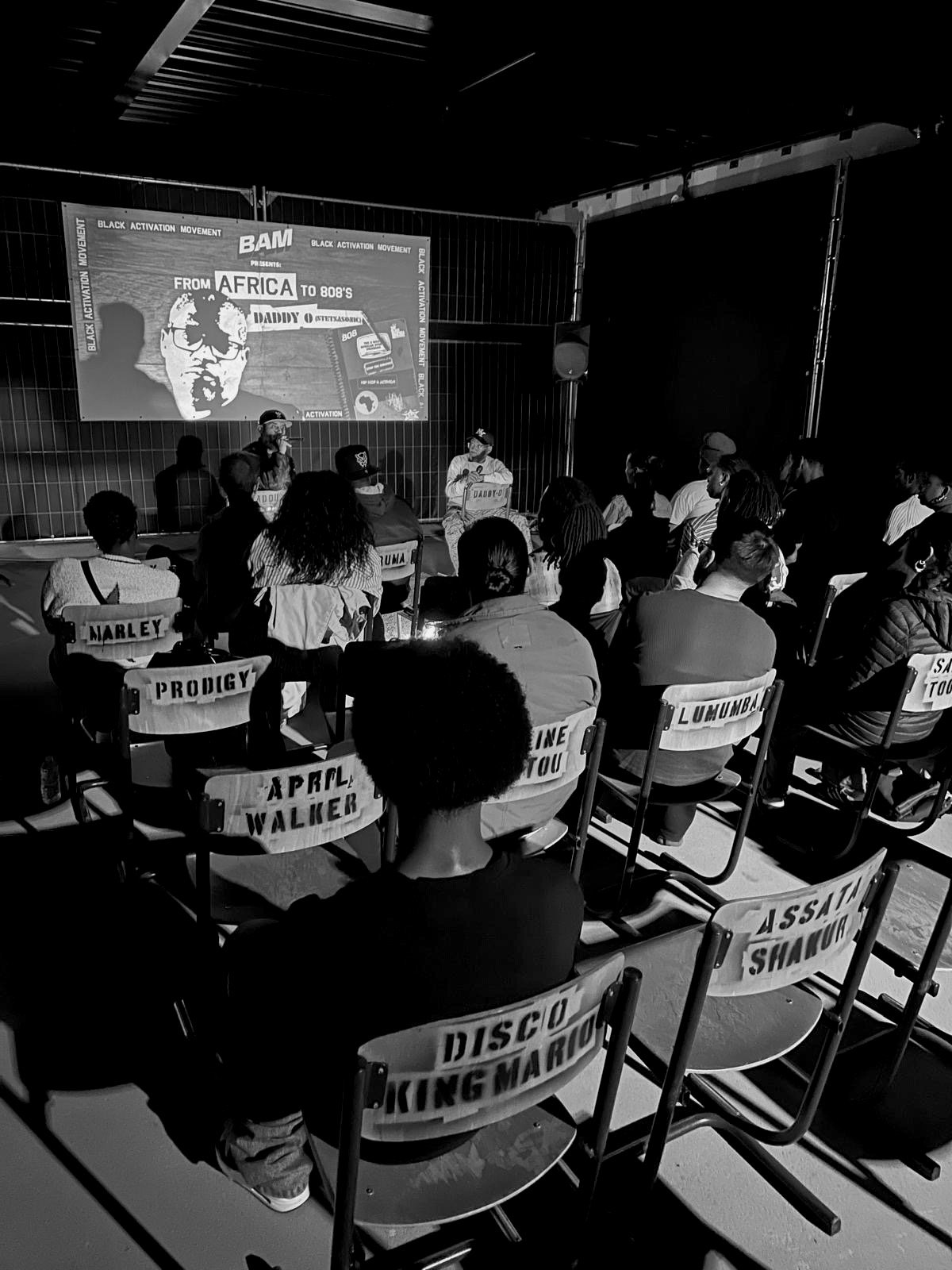
To Talk About African-Centred Education Is To Talk About Hip Hop
The sacrifice Bamba made by returning to the Netherlands also speaks to something he sees as inherent to the culture of Hip Hop. Beyond the elements that bring enjoyment, Hip Hop carries wisdom and can function as a powerful form of pedagogy, shaped by African and diasporic traditions. It is a culture people may enjoy studying from a distance without always recognising the realities from which it emerged. Many of those who lived the Hip Hop Bamba grew up with are no longer here. They took risks, made sacrifices, and followed unwritten codes that determined not only how they moved, but also what they were prepared to stand for.
Daddy-O reflected on what he sees as the erosion of some of those codes. In his view, something changed when authenticity, loyalty, and responsibility towards one another became less central. What once required accountability can now become a question of finding a way out, while the expectation that people stand up for one another has weakened. At some point, he argued, Hip Hop began to be used against itself. The consequence is not simply a change in music, but the loss of a moral compass and of an environment in which development once happened through books, conversation, and constant exchange.
Perhaps one of the greatest losses discussed was the declining conversation between generations. Daddy-O returned repeatedly to the importance of elders and the value of lived experience. The internet can provide access to an extraordinary amount of information, but information should not be mistaken for experience. Young people need to listen to those who came before them, just as elders must remain willing to listen to younger generations. What is lost when these conversations disappear is not simply advice, but a form of knowledge that can only be transferred through human relationships.
This is particularly significant within Hip Hop because its development cannot be separated from African diasporic traditions of oral expression, communal learning, and the transmission of knowledge. Yet Hip Hop should not be treated as something frozen in its origins. Its strength has always been its ability to move, borrow, transform, and create through open formats. That fluidity is precisely what has allowed it to remain forward looking, even while some continue to approach the culture as though it has never fully grown up.
To speak about African-centred education, then, also requires us to think beyond the conventional boundaries of education itself. Knowledge does not only move through institutions, textbooks, or the internet. It can move through music, conversation, observation, mentorship, and the exchange between generations. Hip Hop offers a way of thinking about that process because it creates, adapts, samples, responds, and passes something forward. From this perspective, the statement that concluded this part of the conversation becomes less about tracing a simple line of historical descent and more about recognising a cultural relationship: Hip Hop is Africa, and Africa is Hip Hop.
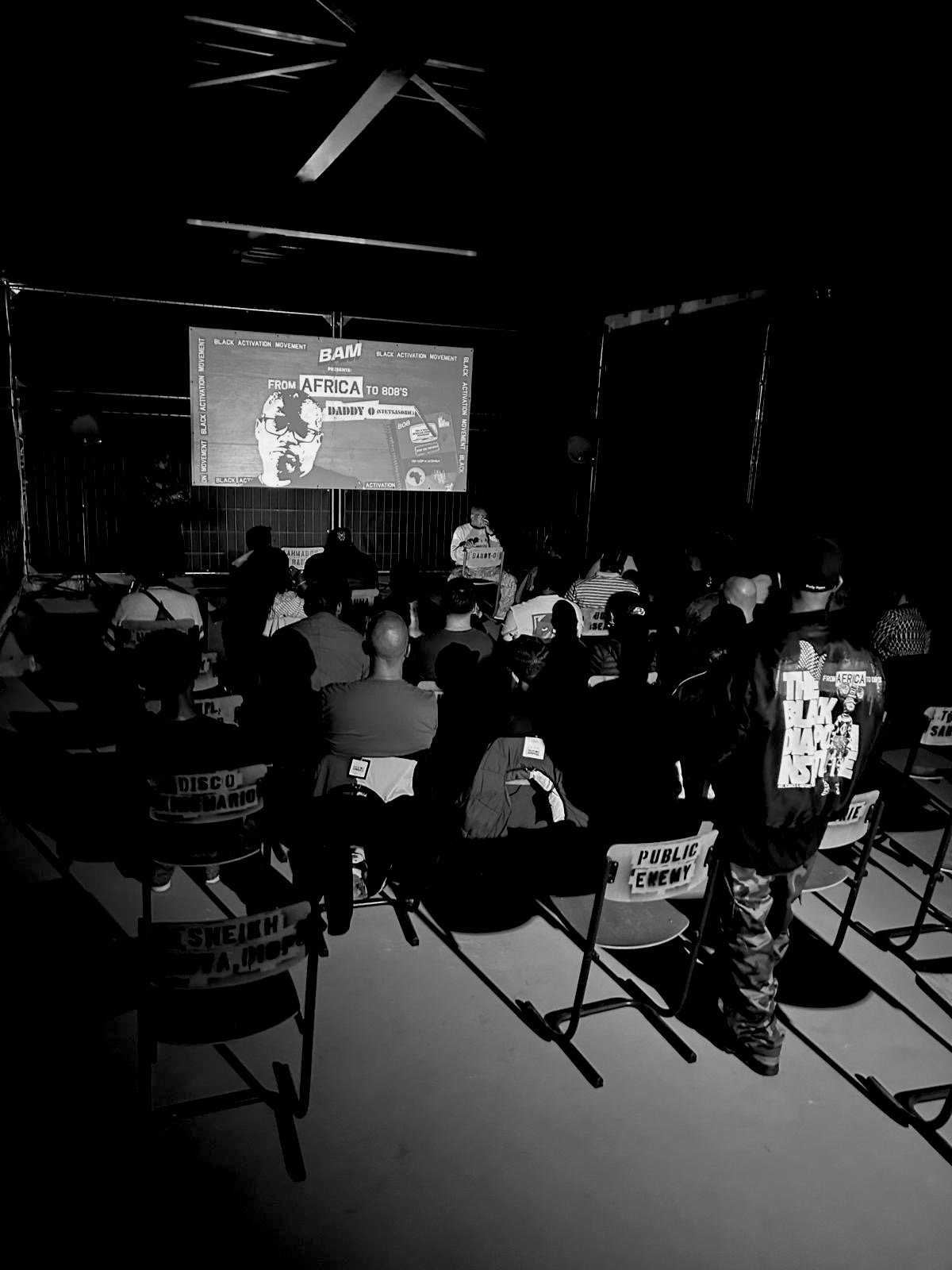
To Live Amongst Legacy Is to Be Called Towards Duty
Being in the presence of someone who helped lay the foundations for a culture we continue to enjoy was not only inspiring. It also demanded a moment of self reflection. For just under two hours, we were sitting alongside a living legacy, someone who had taken seriously the responsibility that came with what he was given and what he helped create. That recognition leaves us with another question. What do we do with what has been passed down to us? More importantly, how do we ensure that the work of Daddy-O, and that of all our elders, does not become a legacy whose efforts lead nowhere?
As the previous sessions have made increasingly clear, The Black Activation Movement places action at the centre of its work. Our people deserve more than what they are currently receiving. Recognising that reality is one thing, but accepting the responsibility that follows from it is another. That understanding has to be built collectively, even when doing so requires sacrifice. We all carry, individually or together, a purpose that has brought us to where we are. Our task is to determine where initiative is needed and where circumstances require us to act decisively. The work will not always be easy, and criticism will inevitably accompany it, but what can be created on the other side makes that responsibility worth carrying.
Within that process, The Black Diaspora Institute seeks to restore some of what has been lost. The conversation between Bamba and Daddy-O offered one beginning. Reconnecting with our roots requires more than looking backwards. It asks us to address the disconnection that exists in the present, both by engaging with values and practices carried across generations and by speaking to those who still hold the knowledge that cannot simply be recovered from books or online archives.
The Institute therefore has a responsibility to help create the foundations through which such knowledge remains accessible. This program has been one attempt to do exactly that. It has brought different ways of knowing into the same space and allowed them to speak to one another rather than forcing them into a single form. Among those forms, conversation between younger and older generations may be one of the most important bridges we can rebuild. Our elders will not always be here to answer our questions. Listening to them while they are, and carrying something forward when they no longer can, is not simply an opportunity to learn. It is part of our duty.