
Voices of Resistance: Memory, Storytelling and Diaspora Activism
Stories can carry histories long after the moment in which they were first lived. This relationship between storytelling, collective memory, and resistance formed the starting point of the fifth session of the African Studies Program. Led by Karabo Maisela, the lecture drew on her work and personal connection to generations of activism to consider how histories are preserved, how past and present remain connected, and how communities within the diaspora are shaped through what is remembered and passed on.
In many ways, the session extended questions that have accompanied us throughout the program, while approaching them from a different position. Karabo’s reflections were shaped by both her South African cultural background and her experiences of living in the Netherlands in recent years. Moving between these contexts has influenced how she approaches and understands knowledge, creating space to consider what happens to our understanding of history, memory, and identity when we encounter them from different places. What follows is a closer look at some of these ideas, and at what they can teach us about the stories we inherit, preserve, and ultimately pass on.
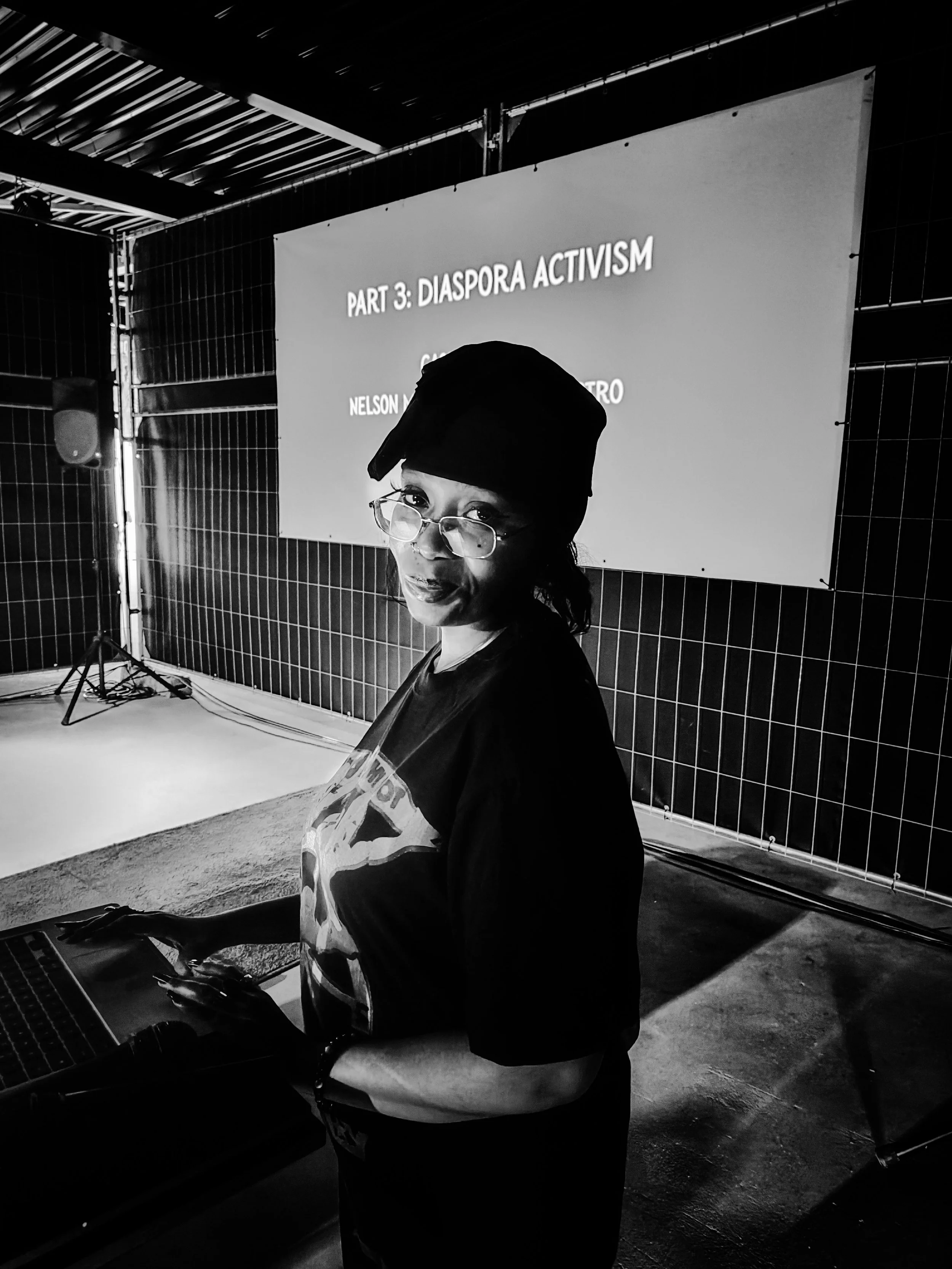
Though Memories May Fade, the Ability to Know Remains
The session opened on a moving note, with a moment dedicated to Jason Arday, the prominent Black scholar who was found dead in London on 14 August 2026. His death followed weeks of intense public scrutiny surrounding allegations of plagiarism, which he denied. For us, the hostility that surrounded him cannot simply be separated from broader questions about anti-Black racism and the pressures Black scholars continue to face within academic institutions.
Arday’s story also provided a meaningful point of departure for Karabo’s talk. Her own experiences have confronted her with the consequences of navigating institutions and systems shaped by anti-Black racism, albeit under very different circumstances. She began by asking participants to share their favourite memory. The answers ranged from moments earlier in life to experiences from the past year, but the question carried a different weight for her. At fourteen, Karabo experienced short-term memory loss following a period of psychiatric treatment that included electroconvulsive therapy. She described how an initial diagnosis of depression, followed by medication and its effects, eventually led to further treatment before she later received appropriate care from another doctor.
To this day, she has no active memories of her hospitalisations. What remained particularly significant in her account was the experience of not being heard. The questions that could have helped someone understand her story were not asked, reflecting a much broader problem in the experiences of Black women within systems of care. Memory, in this context, is therefore not merely theoretical. As Karabo put it, it is connected to survival and lived experience. She may not always be able to reproduce exactly what Frantz Fanon wrote, but she can remember what reading him made her feel and what that knowledge came to mean to her.
This distinction between remembering and knowing became central to what followed. Pain can become part of another person’s understanding, particularly when it is transformed into something that can be shared. Although Karabo described her memory as fragile, she spoke with certainty about knowing that a spirit of activism has always lived within her.
Here, iintsomi, a form of oral storytelling associated with the Xhosa tradition of South Africa, offered another way of thinking about memory. Through performance, sound, language, and narration, human experiences and moral lessons can be carried in ways that make them memorable. Their power does not necessarily lie in reproducing every detail exactly as it happened, but in what survives through the telling. There may be vulnerability in depending on others to carry parts of a story that one can no longer remember alone. Yet there is also something powerful in that dependence. Memory may fade within an individual, while knowledge continues to live through others.
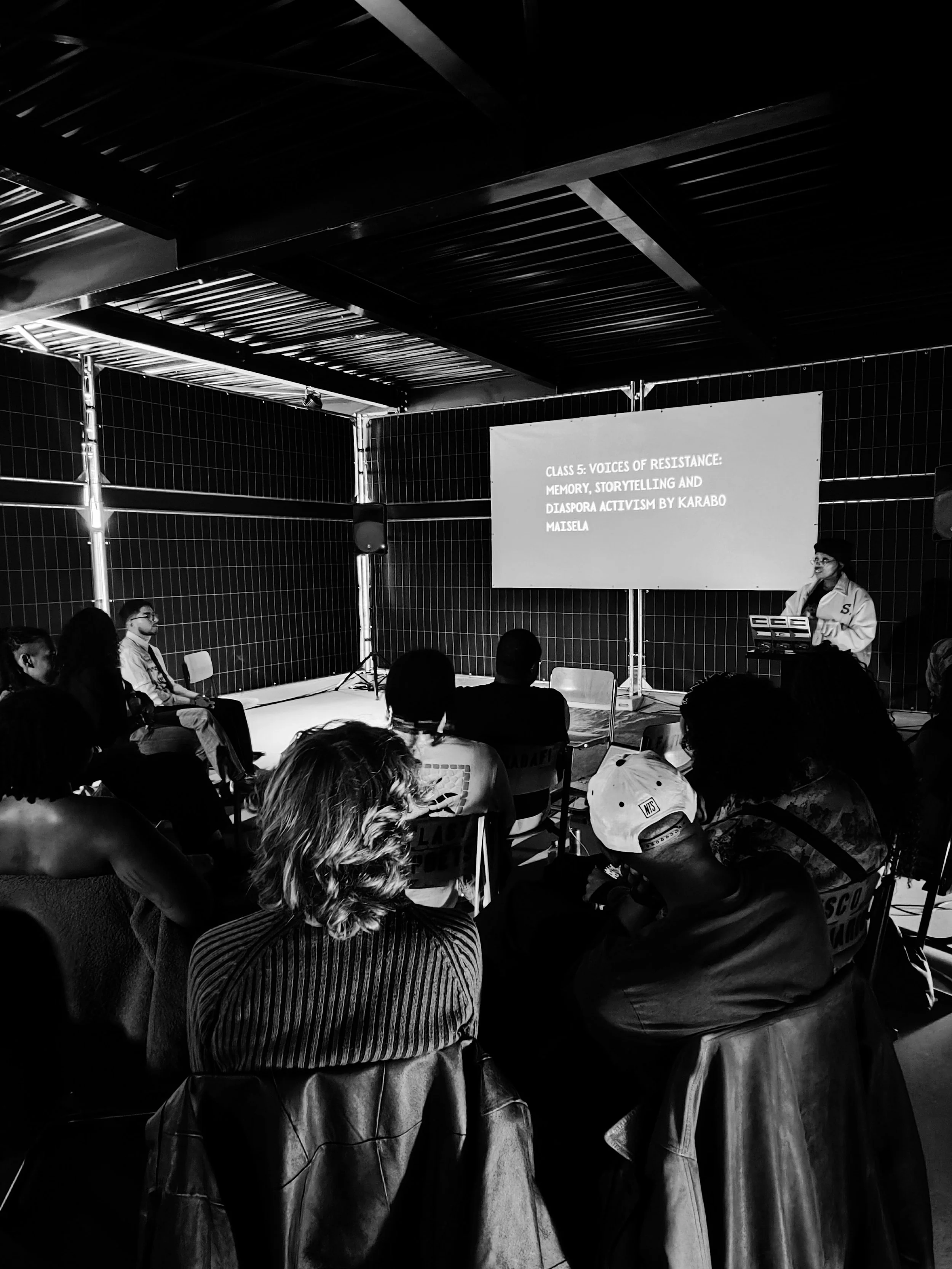
To Stand in Solidarity Is to Make the Struggle Your Own
The spirit of activism Karabo described as living within her did not emerge from nowhere. It is part of a family history of resistance that stretches across generations. She spoke about her grandfather, Patric Maesela, and his involvement in student mobilisation and the underground resistance surrounding the events of 16 June 1976. That history continued through her father, Thabo Maisela, who later became active in structures associated with the ANC. As a child, however, he had been too young to fully understand the political struggle his own father was part of. What one generation carried was nevertheless passed on to the next, eventually reaching Karabo.
Yet inheriting a history of activism does not mean reproducing it in exactly the same form. It can also create an understanding that another person’s struggle can become your own. This approach is rooted not simply in sympathy, but in empathy and in trying to understand what brings people to where they are. In reflecting on figures such as Nelson Mandela and Fidel Castro, both of whom leave complicated legacies, the focus was not on overlooking those complexities, but on recognising that their politics extended beyond ideas and into action among the people.
This distinction between speaking about struggle and being present within it became central to the conversation. Contemporary activism can become disconnected from the communities it claims to serve when practical work disappears. Food programmes, mutual care, and organising among the people are not secondary to political thought. They are part of what gives solidarity meaning. Returning to those roots therefore also means rebuilding intimacy, responsibility, and a willingness to care for one another.
For years, Karabo described feeling powerless because her contribution did not resemble that of her grandfather or father. Over time, however, she came to recognise that resistance does not require everyone to occupy the same role. Her own contribution lies partly in creativity and in using it to show what South Africa and its people have to offer. We may not all resist in the same way, but everyone can contribute. The challenge lies in discovering what that contribution can be and then being willing to act upon it.
Memory and experience can help us locate that role. History and objective facts matter, but so does the voice formed through what has been lived, inherited, and remembered. Solidarity becomes more than identifying with someone else’s struggle when that understanding is made one’s own and translated into action.
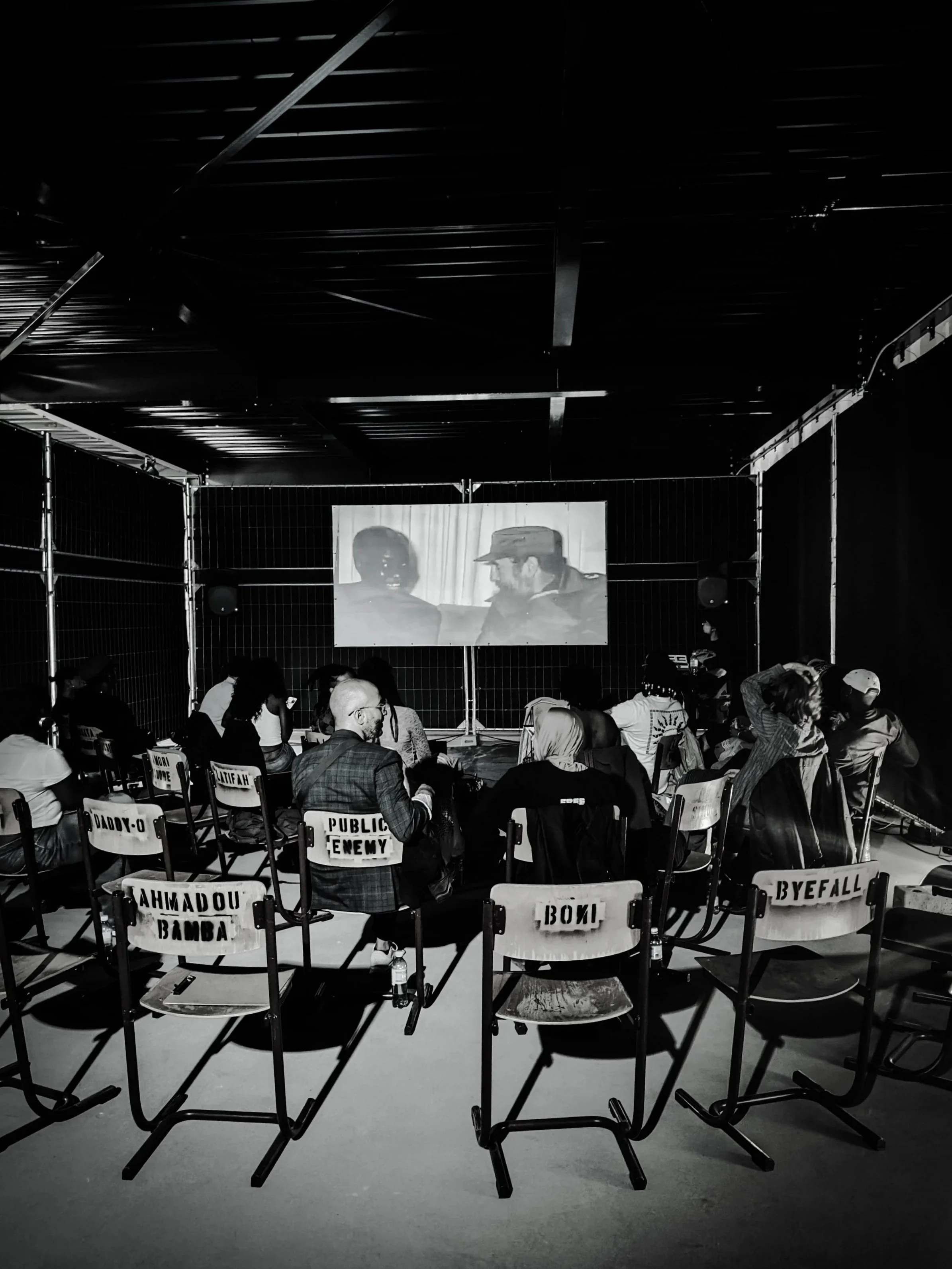
By Any Means Necessary Will Continue to Exist, and Already Does Through Us
Karabo’s willingness to take systemic problems personally resonated strongly with us. Towards the end of the session, she posed a question that immediately felt familiar: what are you willing to die for? At The Black Activation Movement, this question lies close to how we approach our work. Perhaps, for us, the question is even reversed. When it comes to our people, what are we not willing to die for?
It is in this sense that By Any Means Necessary continues to guide our approach. Being driven by action and working towards what our people need inevitably comes with setbacks and sacrifices. Yet difficulty does not make the work any less necessary. Nor can this responsibility rest with only a few. Difficult goals must be pursued collectively, which means that those who have not yet found their place within the work are called upon to join it.
Action alone, however, is not enough. There must also be a conscious effort to detach our thinking from the structures that have contributed to where we find ourselves today. Karabo reflected on how spaces and systems can be structured in ways that discourage people from questioning the information placed before them. The response must be to do precisely the opposite. Information should be questioned, and questions should continue to be asked.
This also means creating and entering spaces where questioning is not treated as something to be contained. Asking questions is inseparable from learning. The Black Diaspora Institute exists to provide room for precisely that process, not to place people into predetermined boxes, but to think, question, exchange, and reflect together.
The space exists, but its purpose can only be fulfilled when our people enter it and make use of it. By Any Means Necessary therefore does not belong only to an earlier generation of resistance. It continues wherever responsibility is transformed into action, wherever inherited structures are questioned, and wherever our people choose to build and learn together. In that sense, it already continues through us.
What’s Next?
Our next gathering will take a different form. Rather than a lecture, we will come together for a screening of the powerful documentary The Coconut Revolution on Saturday, 29 August.
The film feels like a fitting addition to the journey we have taken so far. Across the program, we have encountered histories through lectures, literature, storytelling, personal experiences, archives, and collective memory. Film now offers another way of approaching the past, inviting us to consider what becomes visible when history is not only studied, but also watched, heard, and experienced together.