
DR. CATHERINA WILSON
African Footprints Across the Atlantic
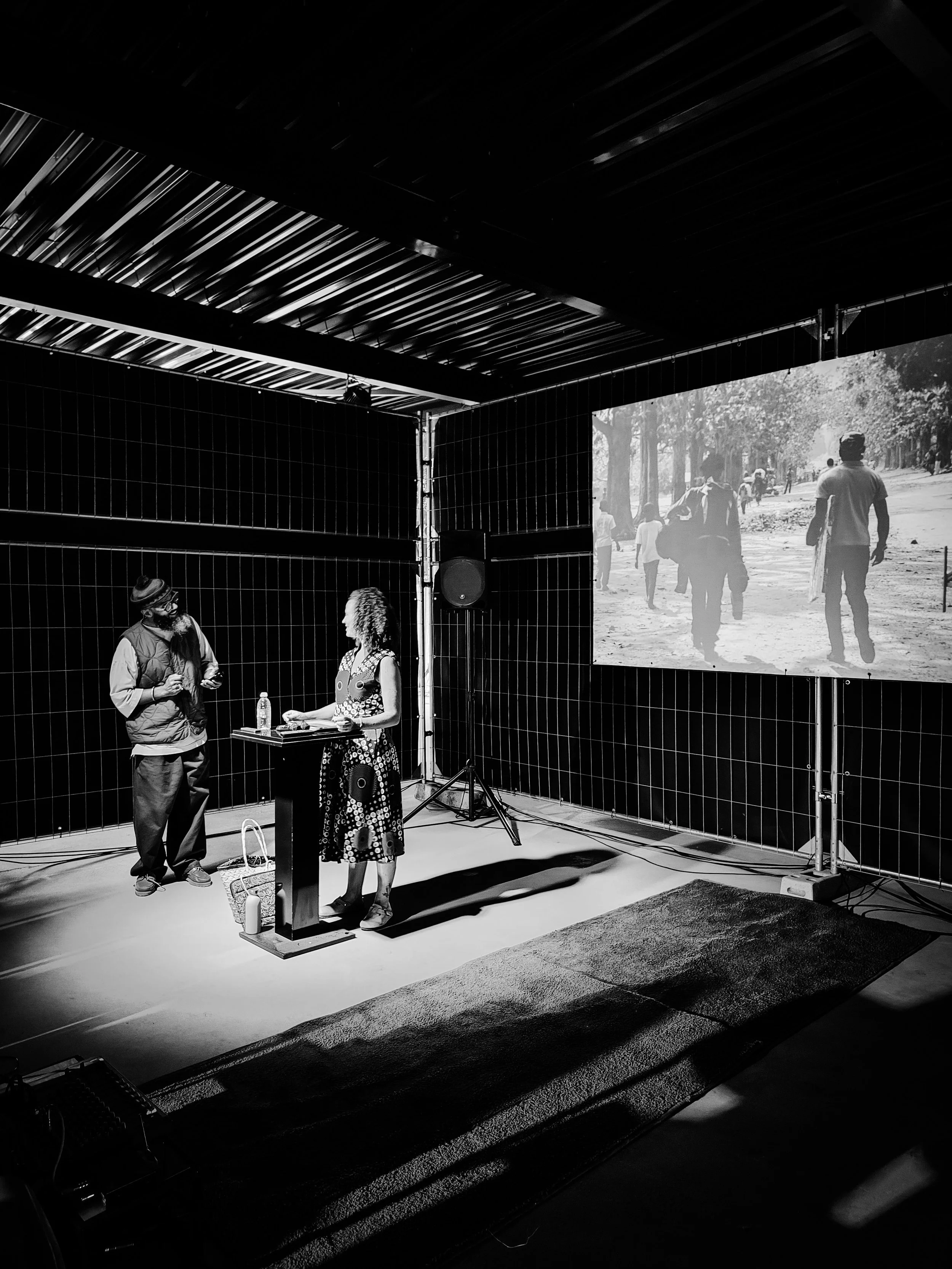
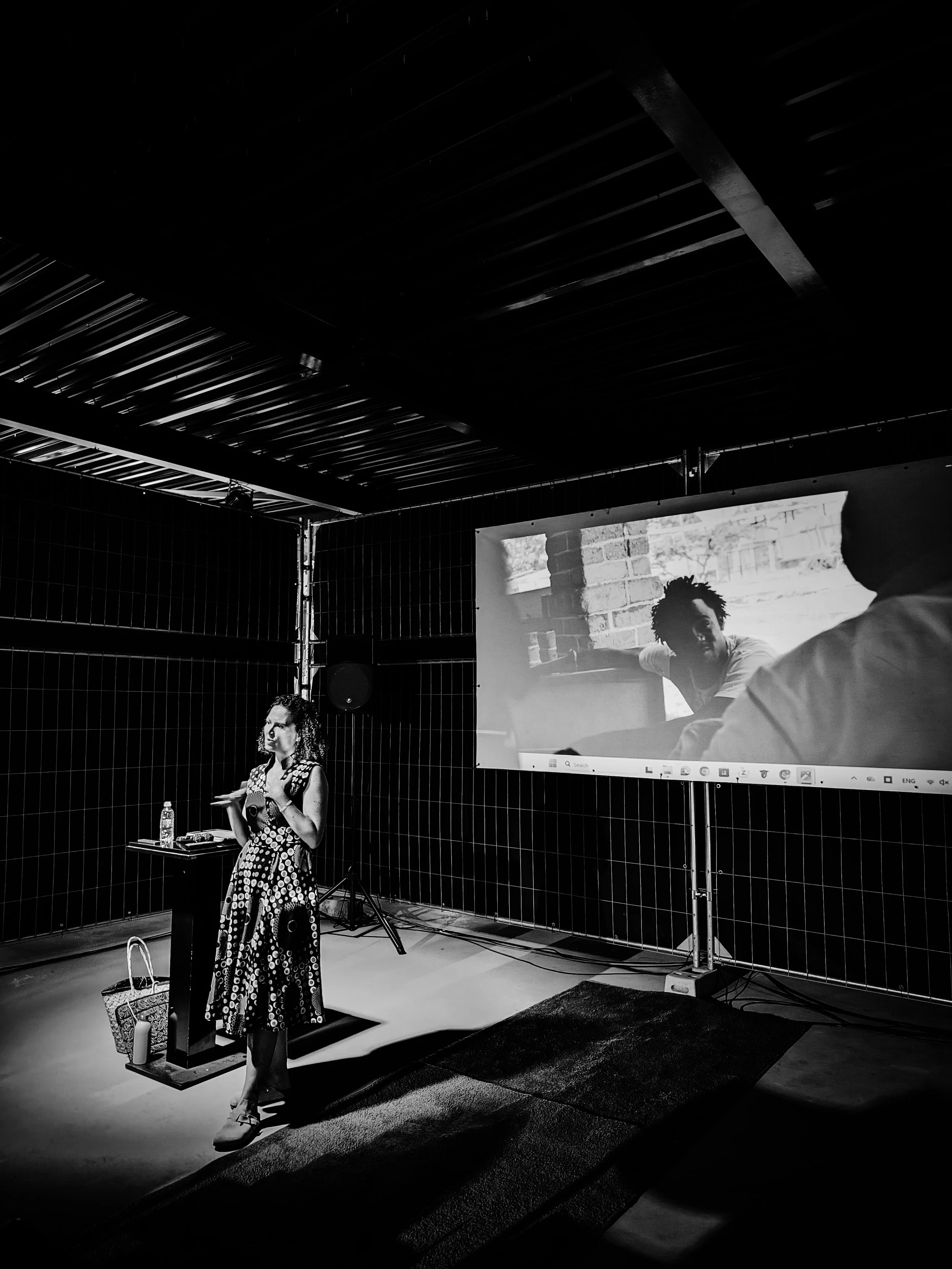
The fourth session of the African Studies Program focused on knowledge, the different ways in which it is valued, and the invisible histories that can offer another perspective on African mobility. Led by Dr. Catherina Wilson, the session created space for both lecturer and participants to reflect on what constitutes knowledge, where it comes from, and how it is passed on.
As the opening session of the final part of the program, the lecture returned to questions raised earlier in the series about how knowledge is produced and valued, while demonstrating that neither knowledge nor its transmission has ever been confined to formal structures. Catherina reflected on how her own understanding has been shaped not only through formal education, but also through conversations, art, music, and literature. The reflections below revisit some of the themes addressed during the session while considering the broader questions they raise.
Between Africanness and Africanity: The Fluidity of Being African Across Generations and Borders
The session opened by asking participants to introduce themselves, explain why they were there, and name their favourite dish. It was a refreshing way to break the ice, but the answers also revealed something about identity and mobility. Most participants named dishes connected to their own cultural backgrounds, while the foods themselves reflected histories of movement, exchange, and the blending of cultures.
Mobility also runs through Catherina’s research across different parts of the world. Her interest first developed in Central Africa, where conversations with younger and older generations demonstrated that displacement and movement are far from recent phenomena. Borders are constructions, and treating them as fixed can obscure the ways people, histories, and communities have always moved. Rivers offer another way of thinking about this. Rather than functioning merely as boundaries, they can connect communities while carrying histories and stories across territories.
These questions eventually led her beyond the African continent and towards her own Colombian roots and their connections to Africa. This journey brought her to Palenque in Colombia, founded in 1603 by Benkos Biohó, who had escaped enslavement and whose origins are believed to lie in present-day Guinea-Bissau. Today, Palenqueros maintain a strong sense of identity. Many identify first with Palenque, the first free town in the Americas, rather than with Colombia itself. The community has preserved its own music and Creole language, which combines Spanish with African linguistic influences and continues to be taught in schools. Yet concerns about its survival remain, particularly in the absence of sufficient institutional investment.
Palenque also reveals the complexities that arise when history becomes a tourist attraction. Visitors interested in Afro-American history bring economic opportunities, but much of the financial benefit flows elsewhere. At the same time, the community risks being exoticised and reduced to a place where outsiders come to observe cultural practices. The arrival of visitors carrying their own expectations of what African or diasporic identity should look like raises further questions about responsible tourism and who ultimately gets to define a community’s identity.
Palenque provides a powerful example of African mobility, but also demonstrates the limitations of discussing mobility without confronting the conditions under which movement occurred. The African roots of the Palenqueros are connected to forced displacement through slavery. More broadly, African presence outside the continent cannot be understood solely through contemporary migration. In Europe, that presence can be traced back at least to the Roman period, challenging both the image of Europe as historically white and the assumption that slavery existed exclusively beyond its borders.
Similar questions continued into the twentieth century. After the Second World War, people arrived in Europe and contributed to its reconstruction while not always being welcomed as part of European societies. This raises a fundamental question about who is considered a newcomer and who was already there. Historicising African presence makes visible that it is neither recent nor exclusively post-colonial. It has formed part of European history for centuries.
Understanding the Complexities of Slave Trade Routes Through Literature
The forced journeys undertaken by Africans at different moments in history have been documented in numerous ways and often through particular lenses. Yet knowledge is not confined to the forms traditionally recognised as authoritative. It can also be found by looking beyond them. This made Catherina’s own journey of discovery particularly valuable, not only in what it revealed about these histories, but in what it suggested about where knowledge can be found and how some stories are told while others remain unheard.
With this in mind, the lecture approached the history of slavery through literature, focusing on routes across the Indian Ocean, the Sahara, and the Atlantic. Rather than treating the slave trade as a single movement, three literary works offered different perspectives on its many routes, experiences, and legacies.
In Samahani, published in French as La Princesse de Zanzibar, Abdelaziz Baraka Sakin follows an enslaved boy taken from the East African mainland to Zanzibar to serve in the Sultan’s harem. Through his perspective, the novel explores slavery around the Indian Ocean and its lasting effects. Sakin himself lives in exile, while the novel has been banned in his native Sudan as well as in Oman. Maryse Condé’s Ségou shifts the perspective from the individual to the family. Following a West African royal family fragmented by slavery and religious transformation, the novel reveals how these histories unfolded within West Africa and across the Sahara. Finally, Manuel Zapata Olivella’s Changó, el gran putas traces transatlantic slavery and resistance across Haiti, South America, and the United States. Through an Afro-diasporic and spiritual perspective, it connects experiences of enslavement, resistance, and freedom across generations.
These works may not document every dimension of these histories in the manner of academic texts, but that is precisely what makes their contribution significant. They provide an experience, a perspective, and a way into histories that can otherwise remain abstract. Knowledge does not become valuable only once it has been translated into academic language. People on the ground are experts too, carrying histories and experiences that may never enter formal archives or scholarly publications.
The question, then, is whether sufficient space is being created to recognise and transmit knowledge in these forms. This also means keeping conversations alive with older generations, whose voices and stories can still be heard while they are here to share them.
To Sacrifice Is to Reclaim Honour
Another important theme addressed during the session was epistemicide, the erasure and suppression of knowledge. This is not a new phenomenon, but was fundamental to colonisation, through which not only lands and people were subjected to domination, but also knowledge and ways of thinking. When certain forms of knowledge are dismissed as inferior or prevented from being passed on, the people and communities who carry them are affected as well. It reminds us that there is no single universal way of knowing, but different worlds, perspectives, and knowledge systems that exist alongside one another. With this in mind, two reflections in particular stayed with us after the session and continue to inform our own work and approach.
Speaking from a Colombian perspective, Catherina at one point remarked, “We would not be independent if it wasn’t for Haiti. No coincidence that their situation today is what it is.” The statement resonated deeply, particularly in relation to the work we are trying to do. Achieving certain goals comes with consequences, but the existence of risk does not mean that those risks should never be taken. The Black Activation Movement is not only prepared to make sacrifices, but is already experiencing what that commitment can demand. Providing our people with what they need sometimes requires us to carry costs ourselves, regardless of the form they take. For us, giving to our people means doing what is necessary. It is also something that should be carried collectively, so that when sacrifices are made, we are there to carry one another.
This brings us to Frantz Fanon’s approach to decolonisation. For Fanon, decolonisation was not a passive process, but a radical and conscious transformation of both the oppressed and society itself. The Black Diaspora Institute actively embraces this approach by creating a space in which people can exchange knowledge and learn without the interference of dominant structures that determine which knowledge is granted value. Inequality manifests itself through knowledge as much as through politics, creating and maintaining relations of domination.
Within a space created by and for our own people, those structures do not have to dictate the terms. The work lies not only in creating such a space, but also in actively recognising, challenging, and dismantling the forms of domination that might otherwise enter it. That work, too, is collective. It is a responsibility carried by us and for us, and one that must not be forgotten.
What’s Next?
Our next class will take place on Saturday, 22 August, and will be led by Karabo Maisela. Titled Voices of Resistance: Memory, Storytelling and Diaspora Activism, the session will explore resistance, collective memory, and the role of storytelling in both resistance and community building.
As we move into the final part of our program, the series also begins to take a different direction from where we started. We look forward to continuing this journey together, not only by engaging with new ideas, but by exploring the different forms knowledge can take, how it travels, and how it can be carried forward.